Group Sing Along
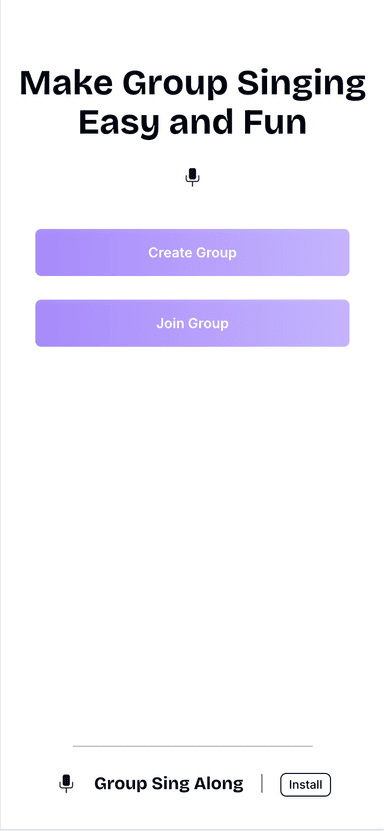
Group Sing Along is a full-stack web application designed to facilitate group singing sessions. Whether at family gatherings, parties, or community events, this app ensures that everyone can follow along with the lyrics in real time. Instead of relying on outdated or insufficient physical songbooks, Group Sing Along provides a modern, centralized solution for shared singing.

Project Purpose & Goal
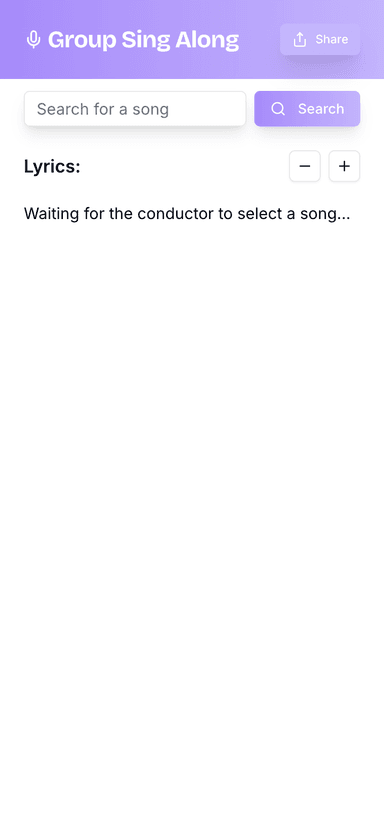
Singing together is a deeply human social activity that fosters connection and joy. However, in large gatherings, not everyone knows the lyrics, and printed songbooks are often outdated or unavailable. Group Sing Along solves this by offering a digital, real-time lyric display, controlled by a designated conductor who selects songs for the group. The goal is to create a seamless, inclusive experience that makes singing together more accessible and enjoyable for all ages.


Stack & Explanation
For Group Sing Along, I chose a straightforward tech stack that was easy to set up and fit my beginner-level skills while still allowing me to learn and experiment with more advanced tools.
Group Sing Along is built with Next.js (React) for its flexibility, component-based architecture, and ability to handle real-time updates efficiently. Styling is done with Tailwind CSS, allowing for full customization.Vercel Postgres (via Prisma) handles database operations, storing song lyrics and user session data securely. The app is hosted onVercel, which offers fast, serverless deployment, ensuring accessibility with minimal setup. This stack was chosen to keep the project lightweight, scalable, and easy to maintain, allowing for smooth real-time interactions between users.
Problems & Thought Process
One of the biggest challenges I faced was ensuring that the first user to join became the conductor, controlling the song selection for the group. I had to implement logic to assign this role automatically and handle edge cases where the conductor left or disconnected. Another issue was making sure that late joiners still received the current lyrics before the next real-time update. Since Pusher broadcasts only new events, users who joined mid-song wouldn't see any lyrics until the next update. To fix this, I had to fetch and display the latest lyrics from the database upon joining, ensuring that everyone stayed in sync regardless of when they entered the session.

Lessons Learned
One of the biggest technical takeaways from this project was learning how to implement real-time updates using Pusher. Understanding how to subscribe to channels and broadcast events was essential, but as a first-time user, I ran into issues with properly handling subscriptions and ensuring events were correctly received across clients. Debugging real-time interactions was challenging, but once I got it working, it significantly improved the app's responsiveness.
Additionally, Next.js had a bit of a learning curve, but once I got the hang of it, it dramatically sped up my build time compared to previous projects. In fact, I was able to build this entire app in just two weeks, which wouldn't have been possible with a less efficient framework. These lessons reinforced the importance of choosing the right tools for the job and how real-time data handling can greatly enhance user experience.